Gate material choice in Essex is more consequential than in many parts of the country because of the specific conditions the county presents. The coastal fringe from Walton-on-the-Naze to Southend-on-Sea carries a salt-laden marine atmosphere that attacks unprotected steel far faster than inland conditions. The clay soils across the Essex plain hold moisture that affects foundations and lower gate ironmongery. The relatively high humidity of East Anglia matters for timber specification in ways that less humid parts of the country do not require the same attention to.
Choosing the right material from the outset determines whether your gate performs for 5 years or 25, and whether the maintenance requirement is a minor annual task or a recurring remedial cost. This guide covers each material category honestly, with specific attention to the conditions typical of different parts of Essex.
Hardwood Gates: The Right Timber for Essex
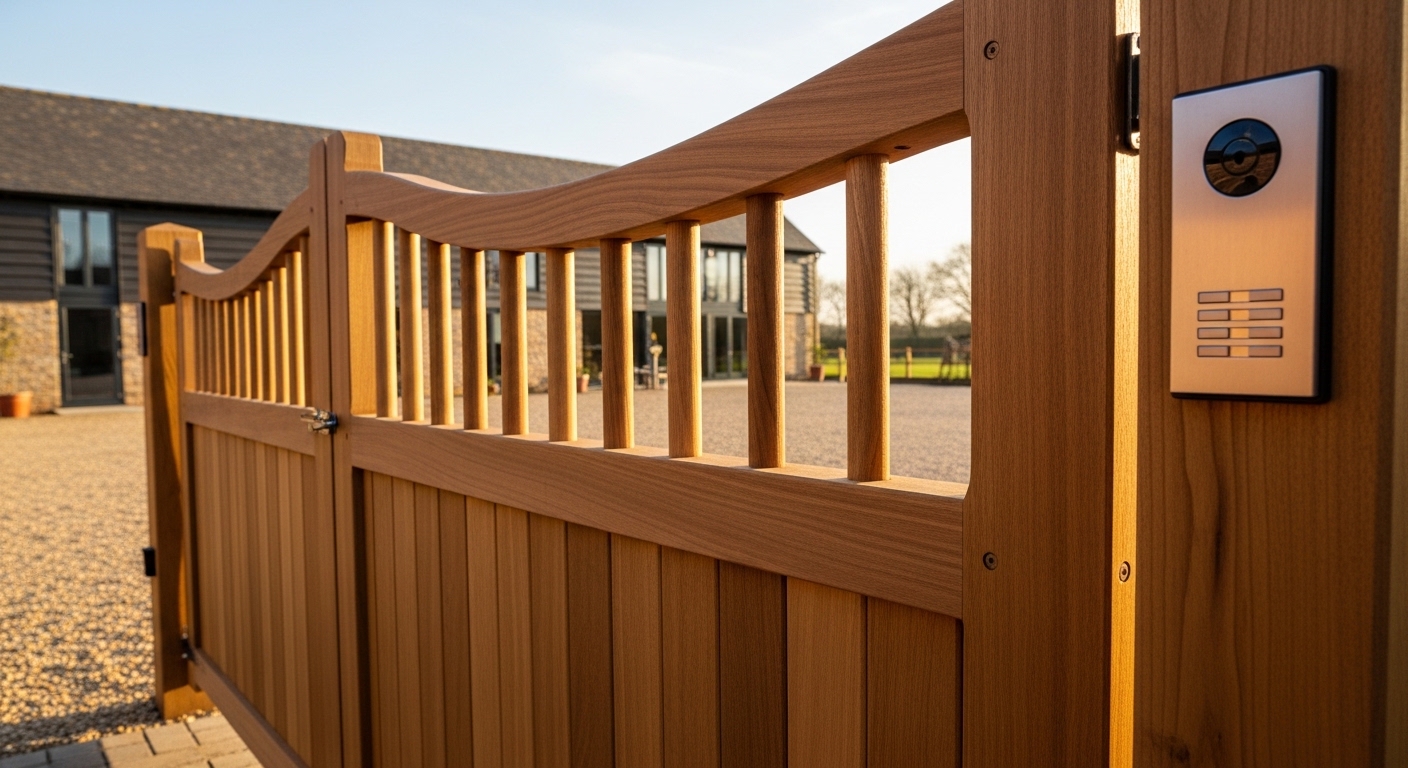
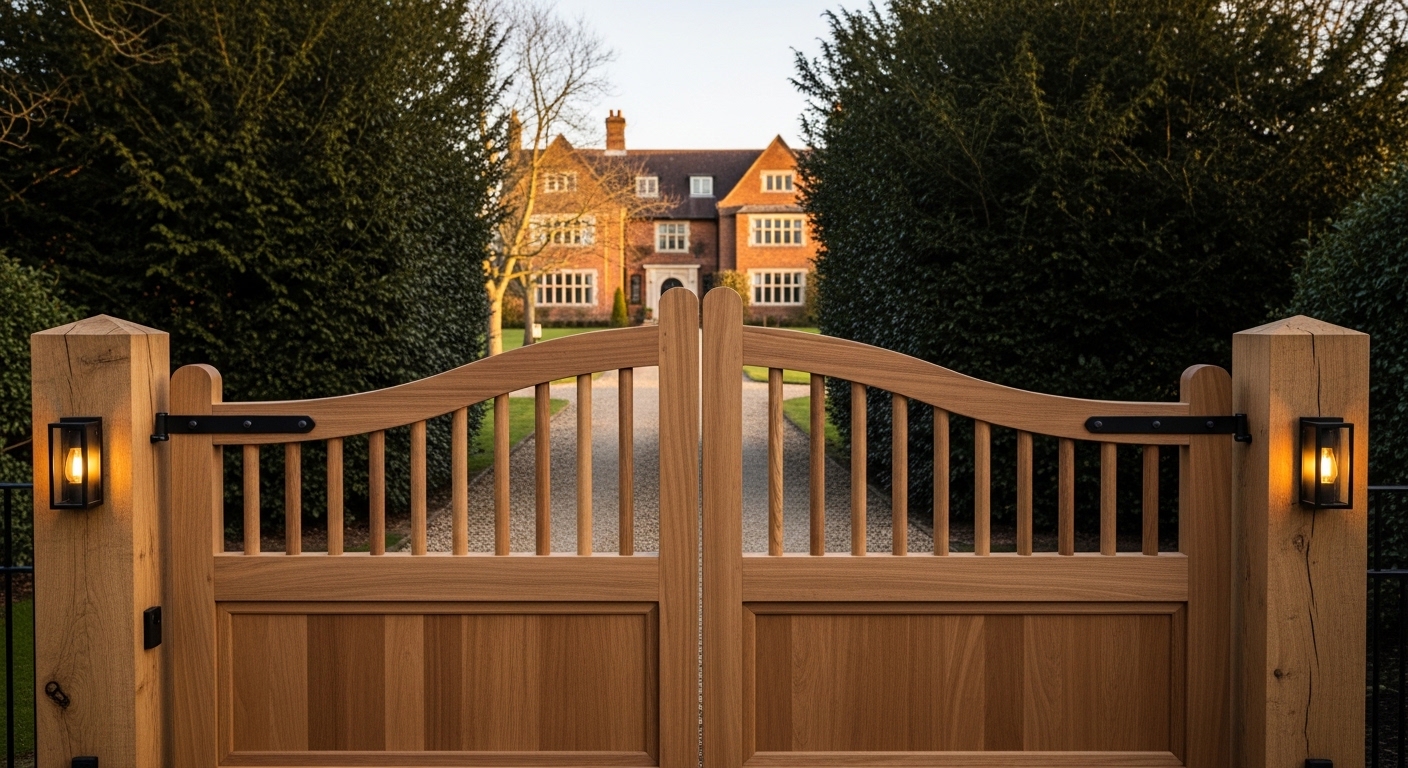
Hardwood gates perform reliably in Essex when the timber species is correctly matched to the conditions and the joinery is well executed. The three species most widely used for residential gates in the county are iroko, European oak, and Accoya, each with different properties and a different maintenance requirement.
Iroko is the practical standard for Essex residential gates. It is naturally durable to Use Class 3, meaning it resists fungal decay and insect attack without treatment, and its natural oil content resists moisture absorption. In East Anglian conditions, where summers can be dry and warm and winters damp, iroko holds its shape and surface integrity better than less oily hardwoods. With a penetrating oil treatment every two years, an iroko gate maintains its appearance and structural integrity for 25 to 30 years.
European oak is the preference on period properties and in conservation area contexts where the grain character and natural weathering behaviour of the material are part of the design brief. Left untreated, oak weathers to a consistent silver-grey. Maintained with a penetrating oil, it holds its warm honey colour. Durability and maintenance requirements are broadly comparable to iroko.
Accoya is the specification for coastal Essex properties or for homeowners who want to minimise long-term maintenance without compromising on timber aesthetics. The acetylation process modifies the cell structure of radiata pine so that it no longer absorbs moisture the way untreated wood does. The manufacturer certifies 50-year above-ground durability. In coastal conditions, Accoya outperforms both iroko and oak in resisting the moisture cycling that the marine environment imposes.
Free Matching Service
Ready to get driveway gate quotes?
Get matched with vetted Essex installers — no obligation, no cost.
Mild Steel: Why the Treatment Specification Matters More Than the Material
Mild steel is the standard fabrication material for bespoke metal gates in Essex and is capable of a very long service life provided it is correctly treated. The critical specification decision is the surface treatment, and this is where the difference between a quality installation and an inadequate one is most consequential.
Hot-dip galvanising before powder coating is the correct specification. The gate is immersed in molten zinc, which forms a metallurgically bonded layer over every surface including internal hollow sections, weld points, and cut edges. The powder coat is then applied over the zinc layer. This two-stage protection means that any chip or scratch in the powder coat exposes zinc rather than steel, and the zinc continues to protect the metal beneath it through a sacrificial corrosion mechanism.
Powder coat applied directly to ungalvanised steel is not adequate for Essex conditions, and it is wholly inadequate for coastal Essex. Any damage to the powder coat surface in an ungalvanised installation exposes steel directly to moisture, and in the coastal environment corrosion establishes and spreads rapidly under the coating. Gates specified with galvanising and powder coat and correctly maintained should not require significant remedial work for 20 to 25 years in inland Essex conditions.
Aluminium: The Coastal and Low-Maintenance Choice
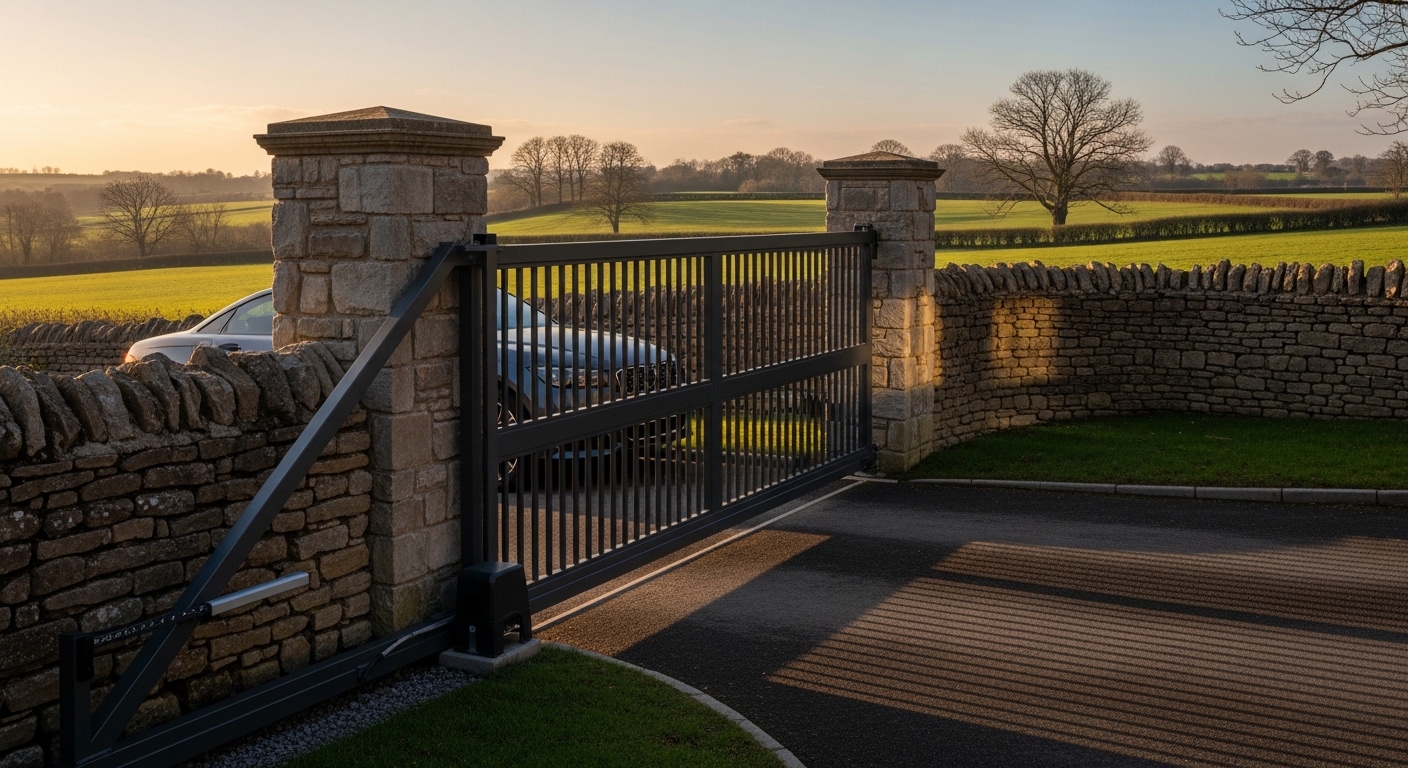
Aluminium does not rust. Its surface oxidises on contact with air to form aluminium oxide, a stable compound that protects the base metal without any additional treatment. For properties within a kilometre or two of the Essex coast, aluminium gate leaves are the most practical specification from a long-term maintenance perspective.
Beyond the corrosion advantage, aluminium is lighter than steel for equivalent section sizes. This matters for automated gates because lighter gate leaves reduce the load on motors and hinges, extending their service life. On wide or heavy gate designs, the weight saving is meaningful and can allow a smaller, less expensive motor to be specified.
Powder coating over aluminium provides colour and a further protective layer. Marine-grade powder coat formulations with higher film thickness and additional UV and salt-spray resistance are available for directly exposed coastal positions and are worth specifying for seafront properties.
Wrought Iron: Character at a Premium
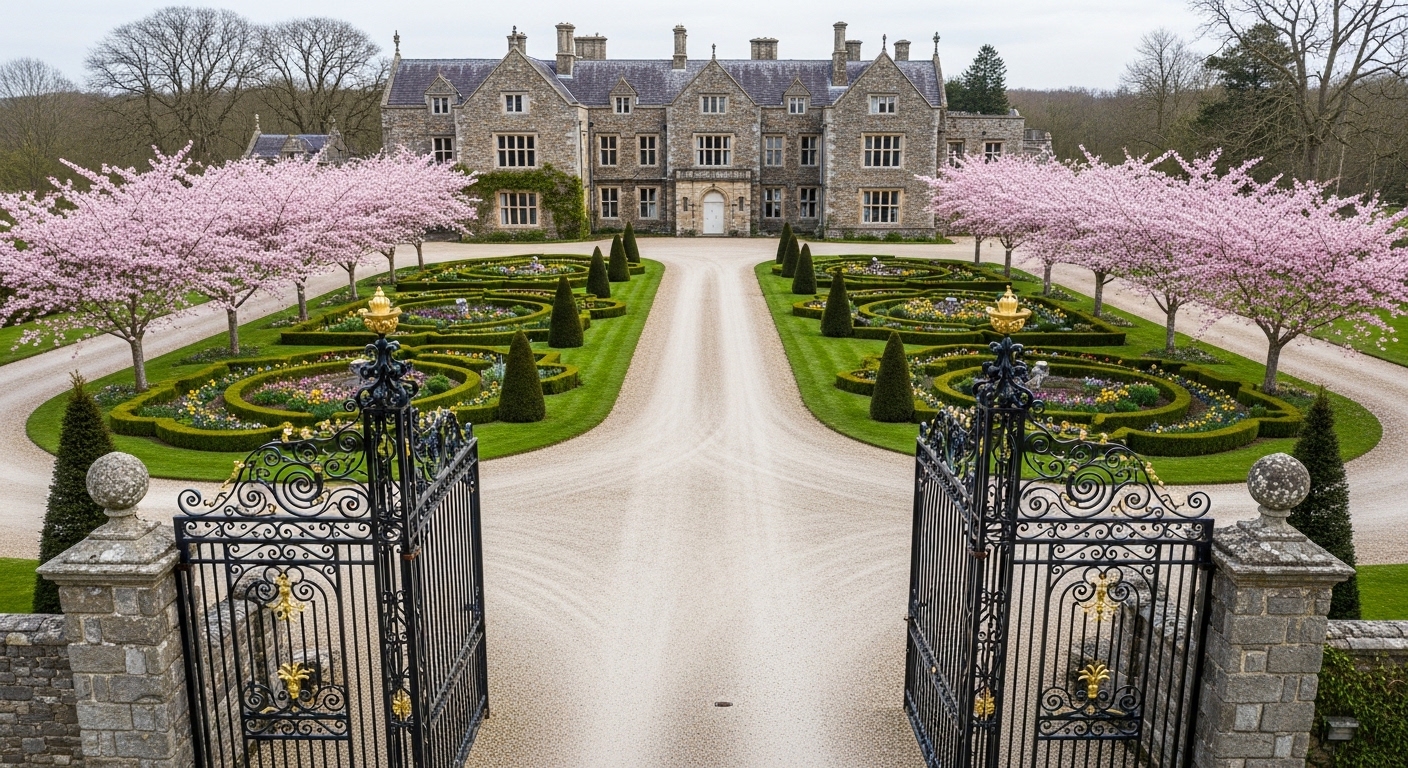
Wrought iron is produced by a blacksmith working metal hot, shaping it by hand rather than by welding and machining. The resulting surface has a texture and character that fabricated steel cannot replicate, which is why it is used on high-specification projects where the material authenticity is part of the brief. It is not noticeably more durable than correctly treated mild steel and requires the same galvanising and coating specification.
Wrought iron gates on Essex properties are concentrated in the West Essex commuter belt, where property values support the premium, and on significant rural or historic properties where the authentic material character aligns with the architecture. Outside these contexts, the cost premium is difficult to justify on functional grounds.
Material Recommendations by Essex Location
- Directly coastal (Frinton, Mersea, Southend seafront): aluminium gate leaves as the primary recommendation. Galvanised steel acceptable with marine-grade powder coat. Accoya for hardwood. Stainless steel ironmongery and hinges throughout.
- Near-coastal up to 2km inland: galvanised steel is a solid specification. Aluminium remains the lowest-maintenance option. Iroko and Accoya for hardwood.
- West Essex commuter belt (Loughton, Chigwell, Brentwood): all materials are suitable. Steel and wrought iron popular on larger properties. Hardwood suits period and rural properties.
- Mid Essex (Chelmsford, Braintree, Maldon): standard specifications are reliable. Iroko and oak well-suited to the rural character of many properties.
- North Essex (Saffron Walden, Halstead, Colchester): conservation area considerations may influence material and design. Hardwood and wrought iron suit the historic character of many properties.
- South Essex (Basildon, Rayleigh, Billericay): galvanised steel and aluminium are practical for suburban driveways. Hardwood where the property style warrants it.