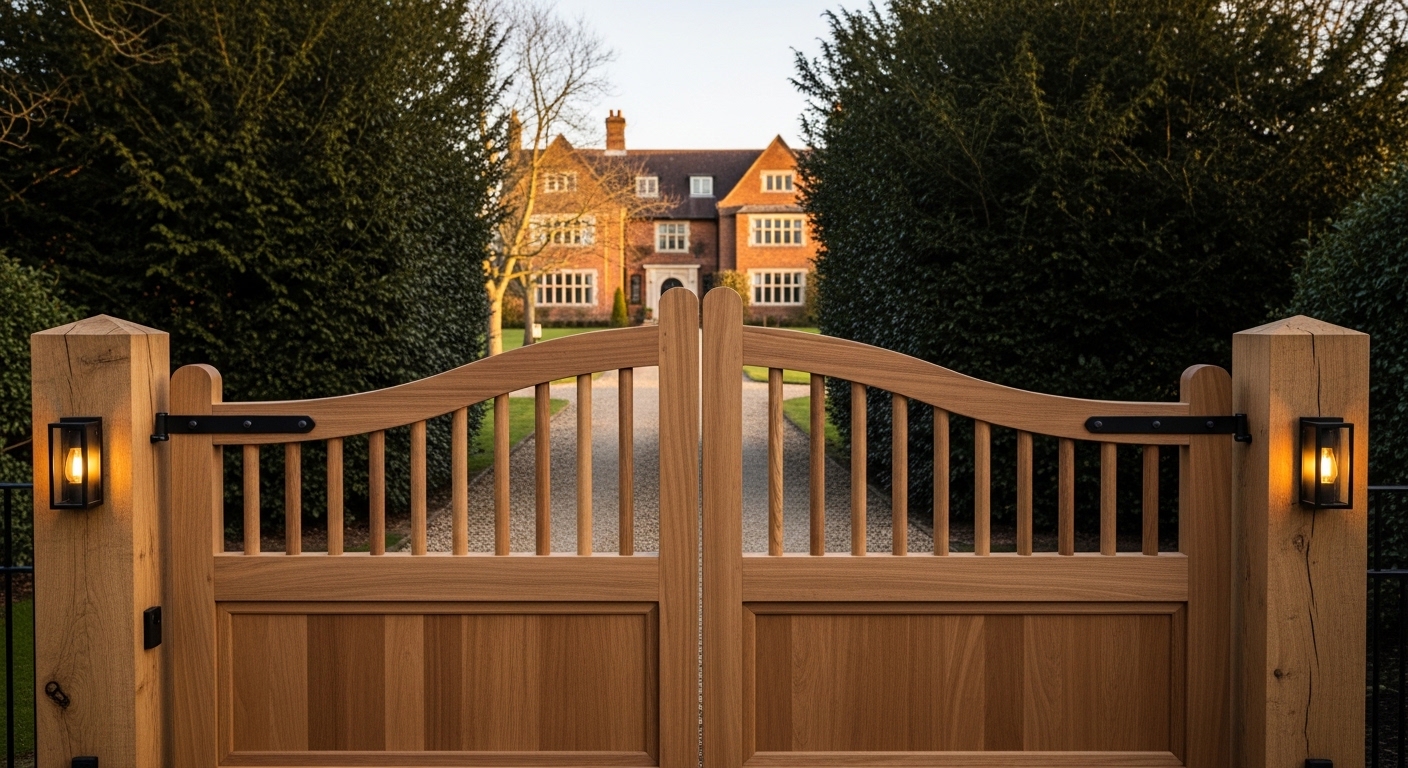

Driveway gates on coastal Essex properties face conditions that inland installations do not. Salt deposited by sea breezes is hygroscopic, meaning it attracts and holds moisture, keeping metal surfaces effectively wetter than inland surfaces even on dry days. This combination of salt and sustained moisture is highly effective at breaking down the oxide layer that protects metal and initiating corrosion. An unprotected steel gate within a kilometre or two of the Essex coast will show surface rust within three to five years. The correct specification from the outset is the difference between a gate that performs for 25 years and one that requires remedial work within a few years of installation.
This guide covers the Essex coastal strip from Harwich and Walton-on-the-Naze in the north, through Frinton-on-Sea, Clacton-on-Sea, Mersea Island, Brightlingsea, and Burnham-on-Crouch, to the Southend-on-Sea and Leigh-on-Sea conurbation in the south. The principles apply to any property within roughly two kilometres of the tidal Essex shoreline.
Understanding the Marine Environment
The intensity of the marine environment varies with distance from the shore and with prevailing wind direction. Properties directly on the seafront or promenade are in the most aggressive zone, with direct salt spray exposure in onshore winds. Properties between 200 metres and 1 kilometre from the water are in a moderately aggressive zone where the marine influence is significant but somewhat reduced. Beyond 1 kilometre, inland conditions broadly apply, though coastal locations with strong and consistent onshore winds carry marine air further than this suggests.
The specific character of the Essex coast matters too. The low-lying, open character of the Essex coastline means there is little natural shelter from onshore winds across much of the coastal strip. Exposed positions on Mersea Island, along the Frinton and Walton seafront, and on the Southend seafront are in a more aggressive zone than equivalent distances from a more sheltered coastline.
Free Matching Service
Ready to get driveway gate quotes?
Get matched with vetted Essex installers — no obligation, no cost.
Aluminium: The First Choice for Coastal Essex
Aluminium is the material recommendation for coastal Essex gate leaves in the most exposed positions. It does not rust. The aluminium oxide layer that forms on the surface protects the base metal without any additional treatment, and this protection does not depend on an intact paint or powder coat surface the way that steel protection does.
Aluminium gate leaves are lighter than equivalent steel gates, which reduces motor load and hinge stress. This is a relevant advantage in coastal conditions where the automation system and ironmongery are also subject to the marine environment. Marine-grade powder coat formulations with higher film thickness and additional salt-spray resistance are available and worth specifying for seafront properties.
Steel in Coastal Essex: When It Works and When It Fails
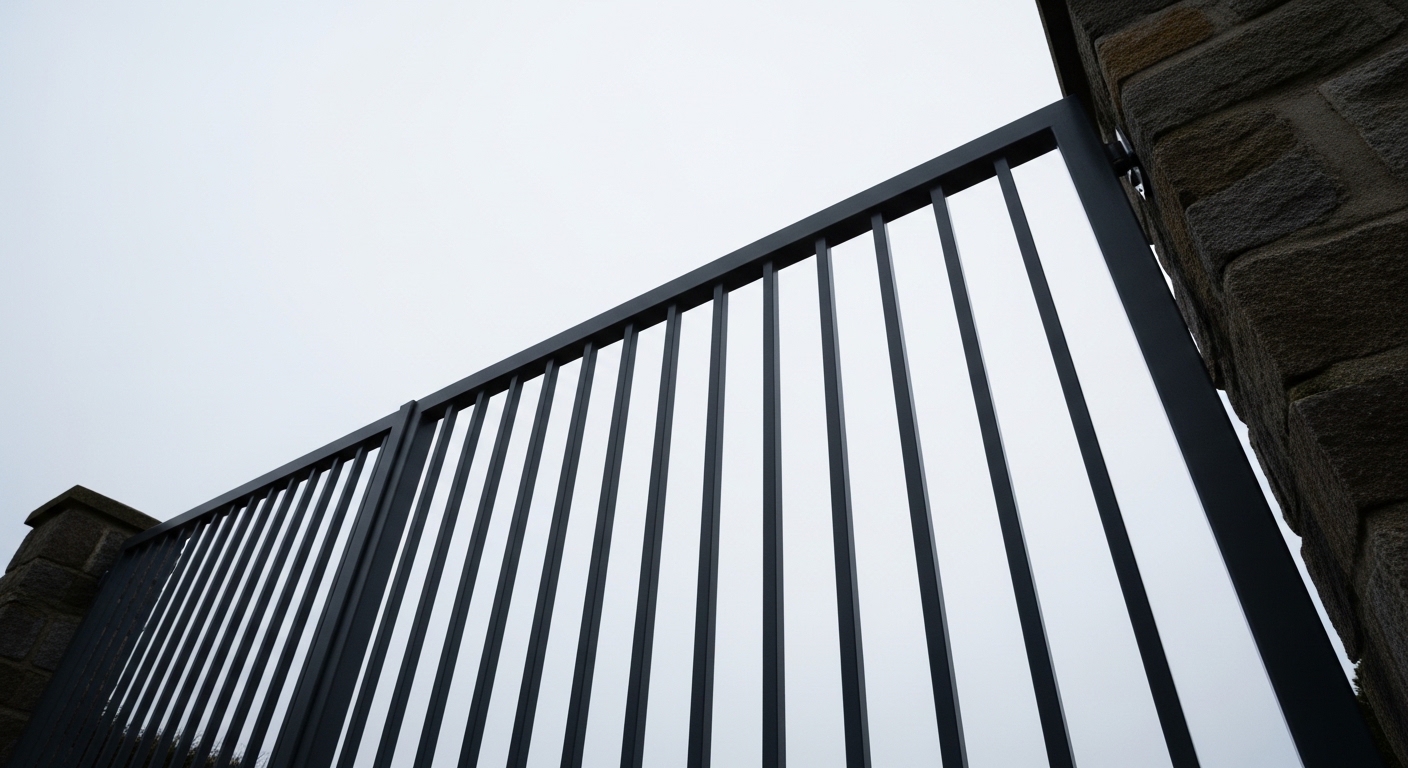
Steel gates can perform well in coastal Essex when correctly specified, but the specification required is non-negotiable and should not be treated as optional. Hot-dip galvanising before powder coating is the baseline for any steel gate in coastal Essex. The galvanising process encases every steel surface, including internal faces of hollow sections, weld points, and cut edges, in a metallurgically bonded zinc layer before the powder coat is applied.
Powder coat applied directly to ungalvanised steel is wholly inadequate for coastal conditions. Any chip or scratch in the coating exposes steel directly to the salt-laden atmosphere, and corrosion establishes rapidly at the exposed point and spreads under the coating. Hot-dip galvanising means that even if the powder coat is damaged, the zinc layer beneath it continues to protect the steel through a sacrificial mechanism.
For the most exposed coastal positions, a thicker galvanising specification of 85 microns or above, rather than the standard 45 to 55 microns used for inland installations, provides additional protection. Confirm the galvanising specification with your installer or fabricator before the gate is made.
Hardwood Gates on the Essex Coast
Hardwood gates perform well in coastal Essex with the right timber specification. The key requirement is a timber with low moisture absorption that resists the repeated wetting and drying that the coastal environment imposes. Standard iroko performs reasonably well and is a viable specification for properties not directly on the seafront. European oak is acceptable for moderately exposed positions with a consistent treatment programme.
Accoya is the preferred specification for coastal Essex timber gates. The acetylation modification changes the cell structure of the timber so that it resists moisture absorption, which means it is substantially more resistant to the moisture cycling that coastal conditions create. The 50-year above-ground durability certification is the strongest available for any timber product and reflects a material that genuinely performs differently in wet conditions.
Ironmongery, Hinges, and Fixings
The gate leaves are the most visible element, but the ironmongery, hinges, and fixings are equally exposed and should be specified accordingly. Stainless steel hinges and fixings, typically grade 316, are the correct specification for coastal properties. Standard galvanised or zinc-plated hardware is not adequate for direct seafront exposure and will corrode visibly within a few years of installation.
Motor housings for automation systems should be rated for outdoor exposure. An IP56 ingress protection rating is appropriate for directly exposed coastal positions. Standard IP44-rated housings are typically adequate for moderately coastal locations but may allow moisture ingress in severe coastal exposure.
Planning Considerations Along the Essex Coast
Frinton-on-Sea has a well-established conservation area covering the original Edwardian garden suburb development. New gate installations in this area are expected to respect the character of the area, which in practice favours painted or powder-coated metal in appropriate traditional styles over contemporary industrial aesthetics. The Tendring District Council planning department can advise on the specific requirements for properties within the conservation area.
Mersea Island is within the Blackwater Estuary environment and has specific natural environment designations that can affect permitted development in some circumstances. Homeowners on the island should confirm the planning position for their specific property with Colchester City Council before committing to any gate installation.
For the Southend area, Southend-on-Sea City Council administers planning. The historic seafront area and the Leigh-on-Sea Old Town have conservation area designations. The wider suburban areas of Southend, Westcliff, and Leigh are generally straightforward from a planning perspective for standard residential gate installations within permitted development limits.