
Gate automation retrofits are among the most commonly booked gate jobs across Essex, and the appeal is straightforward: you keep the gates you already have, avoid the cost and lead time of a new gate installation, and add the convenience of electric operation in one to two days of work on site. The result is immediate and noticeable in daily life, particularly in winter when the alternative is getting out of the car in the dark and rain to open manual gates.
The process is well-established and reliable when the existing gates are in sound condition, but it requires a proper assessment before any equipment is specified. Motor selection depends on gate weight, hinge condition, and the adequacy of the post foundations, and an under-specified or incorrectly installed motor will fail prematurely. This guide covers the assessment process, the main motor options, and the access control additions that are available beyond the basic remote handset.
Is Your Existing Gate Suitable for Automation?

The assessment visit from the installer is the definitive answer to this question, and any installer who quotes without visiting the gate is guessing. The key checks are gate weight and dimensions, hinge condition and alignment, post condition and foundation adequacy, power supply availability near the gate, and available space for motor mounting and the control box.
Gate weight is the most critical factor. Every motor has a rated weight capacity, and the motor must be specified to match the gate. Hardwood gates are significantly heavier than aluminium gates of the same dimensions, and a motor undersized for the load it is driving will wear its gearbox rapidly and fail within a few years. The installer needs to know the gate dimensions and the approximate timber species or metal gauge before specifying a motor.
Hinge condition is the second critical factor. Hinges that have worn to the point where the gate sags, or that are working loose from the post, need remediation before a motor is fitted. A motor does not compensate for a poorly hung gate; it simply amplifies the misalignment through every operating cycle until something fails. Hinge upgrades are a routine part of many retrofit projects and are typically quoted as part of the overall assessment.
Post foundations are checked for adequacy under the additional load of automation. For posts that have been carrying the gate reliably for years without any visible movement, the foundations are usually adequate. Posts that have shifted noticeably since installation need assessment before automation is added.
Free Matching Service
Ready to get driveway gate quotes?
Get matched with vetted Essex installers — no obligation, no cost.
Motor Options for Swing Gate Retrofits
Ram-arm motors are the most commonly specified motor for swing gate retrofits in Essex. They mount on the rear face of the gate and post, connected by a ram arm that pushes the gate open and pulls it closed through the operating cycle. They are visible from the property side when the gate is closed, but they are straightforward to service and replace without excavation, and they are less expensive than underground alternatives.
Underground motors are set into a chamber excavated beneath the gate post. When the gate is closed, the motor is completely invisible, leaving the gate face uncluttered. They cost £400 to £800 more than equivalent ram-arm systems including the excavation, but on gates where appearance is a design priority the additional cost is usually justified. Modern underground units are designed for reliability and are not significantly harder to service than surface-mounted motors.
The motor brand matters for long-term parts support. FAAC, BFT, CAME, Nice, and Beninca are the main quality brands installed across the Essex residential market. All maintain parts availability for their motor ranges for at least ten years after production, which is relevant when a control board or gearbox component needs replacing in year eight of the installation.
Motor Options for Sliding Gate Retrofits
For existing sliding gates already on a track, the retrofit involves fixing a drive rack along the bottom of the gate, installing the motor housing at one end of the track, and mounting the control board and safety sensors. The track, rollers, and end stop positions are inspected and upgraded if necessary before the motor is fitted.
For existing manual sliding gates not on a proper track, more significant groundwork may be needed before automation is viable. The installer will assess and quote for any groundwork required as part of the site assessment.
Access Control: Beyond the Remote Handset
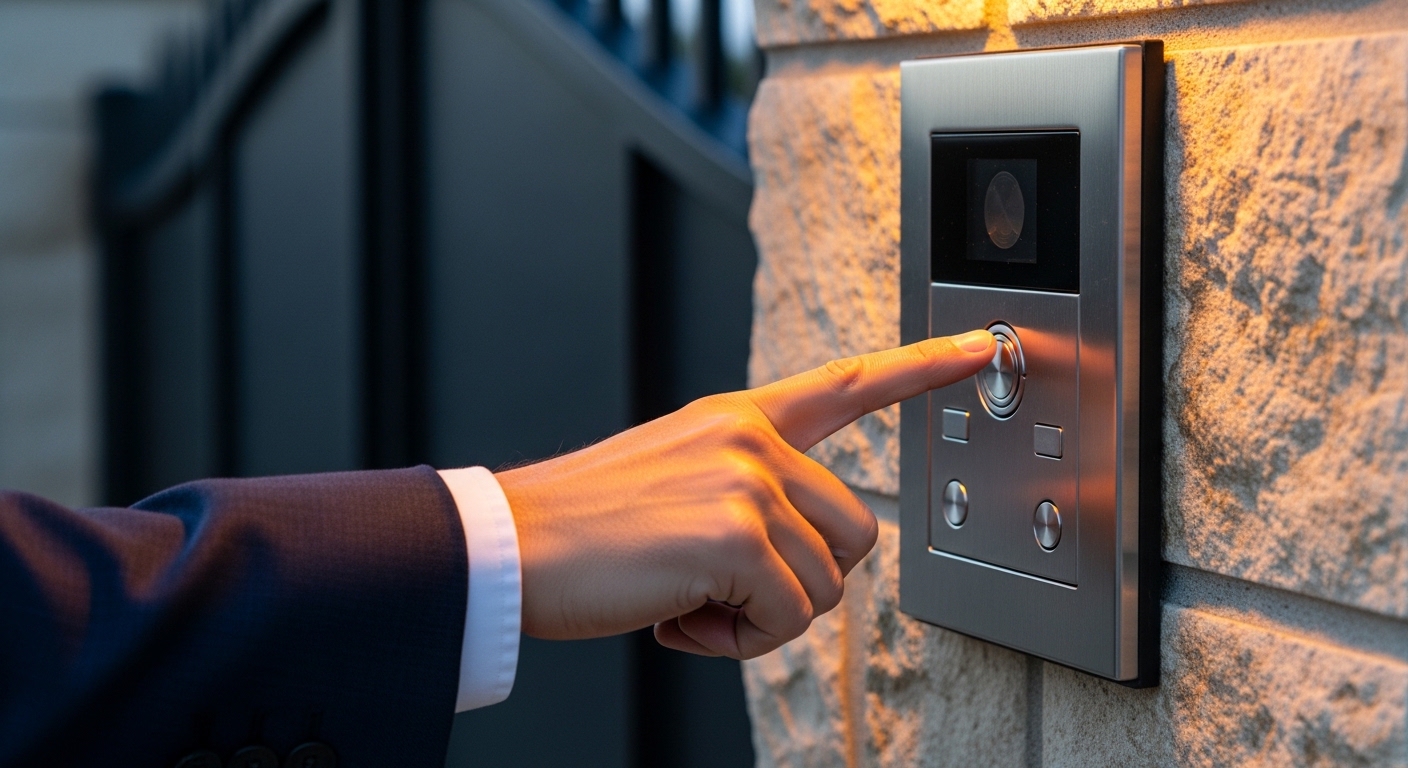
The basic retrofit package includes two remote handsets, which is sufficient for many households. A video intercom system adds a camera and speaker panel at the gate connected to a receiver inside the house and to a smartphone app, allowing callers to be seen and spoken to whether you are at home or not. Basic audio-only intercoms start from around £200; IP camera systems with high-definition video start from £400.
Keypads allow entry via PIN code without a remote, which is useful for regular visitors, contractors, or family members who do not carry a handset. Proximity readers use a fob or card to trigger the gate and are popular for multi-user households. Both are additions to the control board rather than independent systems and are typically quoted as additions to the basic retrofit package.
GSM and Wi-Fi modules connect the gate to a smartphone app for remote operation from anywhere with a signal. Real-time notifications when the gate is operated, remote opening for deliveries when you are not at home, and integration with smart home platforms including Google Home, Amazon Alexa, and Apple HomeKit are all available through these modules. They add £200 to £400 to the overall package cost.
Safety Compliance for Retrofitted Gates
All automated gate systems in the UK must comply with BS EN 12453, which sets performance requirements for safety edges, photocell coverage, and force limits. A compliant installation requires photocell sensors positioned to detect obstructions in the gate path and safety edges on the leading face of the gate that stop or reverse the gate on contact. These requirements apply to retrofitted systems exactly as they apply to new installations.
An installer who fits a motor to your existing gates without adding or checking safety sensors is not completing the job correctly. Ask specifically whether the safety system will be commissioned and documented to BS EN 12453 and request a written declaration of conformity at handover.
What a Retrofit Costs in Essex
A basic swing gate retrofit in Essex, covering two quality-branded ram-arm motors, control board, safety photocells, and two remote handsets, typically costs £1,200 to £2,200 depending on gate weight and site conditions. Underground motors add £400 to £800. Video intercom adds £400 to £800. Smartphone control adds £200 to £400. Hinge or post remediation, where needed, adds £150 to £400.