The sliding versus swing debate is the first question most Essex homeowners reach when planning a driveway gate installation, and the answer is more often determined by the physical constraints of the driveway than by aesthetic preference. Both types are well-established, available in every material and design, and capable of delivering a high-quality result. Understanding the geometry requirements of each type is more useful than reading about which looks better.
That said, where both options are genuinely viable on your specific driveway, there are meaningful differences in installed cost, long-term maintenance, and design options that are worth understanding before you commit to a specification.
Swing Gate Geometry: What Your Driveway Needs
A swing gate opens through an arc of approximately 90 degrees, inward onto the property. The gate leaf needs to complete that arc without hitting parked vehicles, walls, steps, raised ground, or other structures in its path. On a flat driveway with adequate depth, this is straightforward. On a short driveway where vehicles park close to the gate line, or on a driveway that slopes toward the property, the arc creates constraints that may make a swing gate impractical or significantly more expensive to engineer correctly.
Slope is the variable that catches most homeowners out. If your driveway slopes downward from the road, the bottom of a swing gate leaf will sweep closer to the slope as it opens. On gentle gradients, careful motor specification and hinge geometry can accommodate this. On steeper slopes, a swing gate may simply not be viable without groundwork to create a level zone at the gate line, which adds cost.
Free Matching Service
Ready to get driveway gate quotes?
Get matched with vetted Essex installers — no obligation, no cost.
Sliding Gate Geometry: What Your Driveway Needs
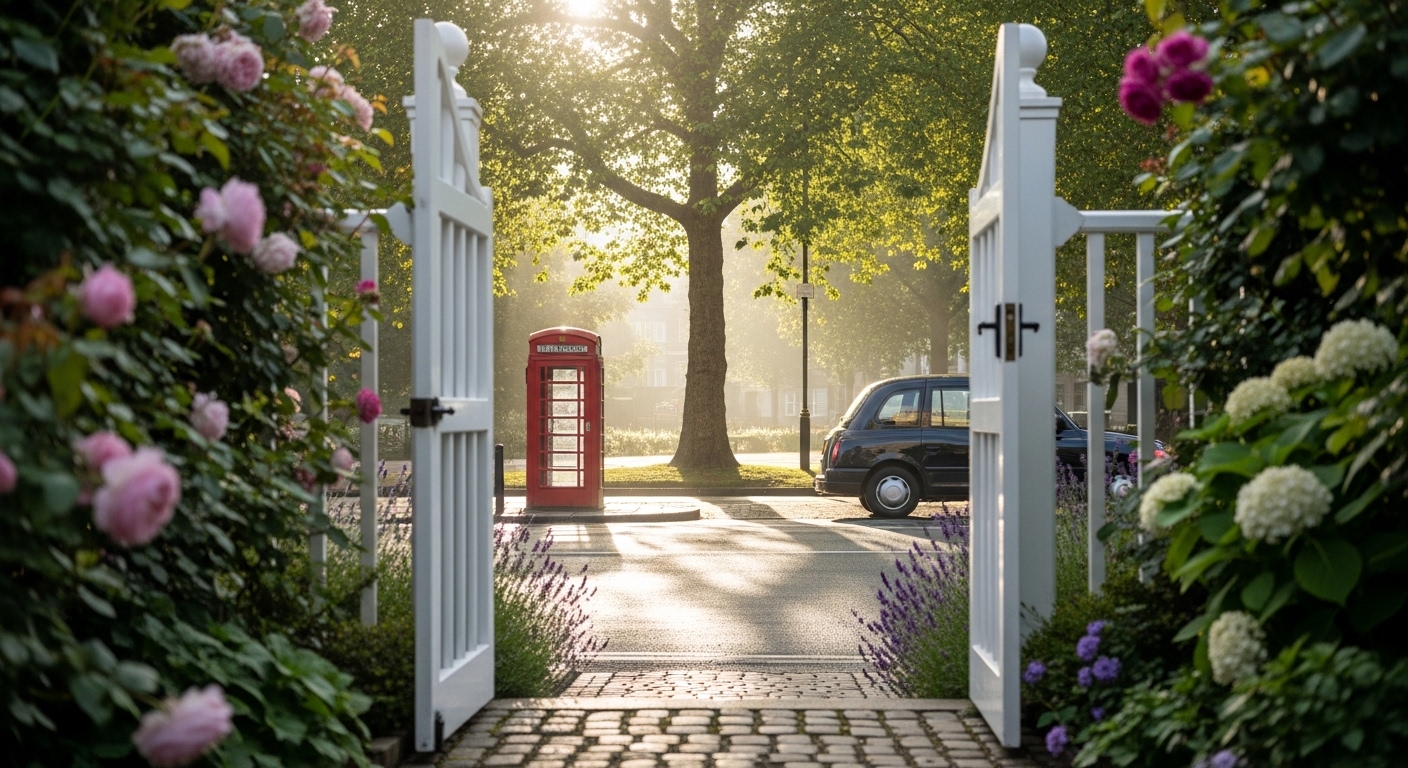
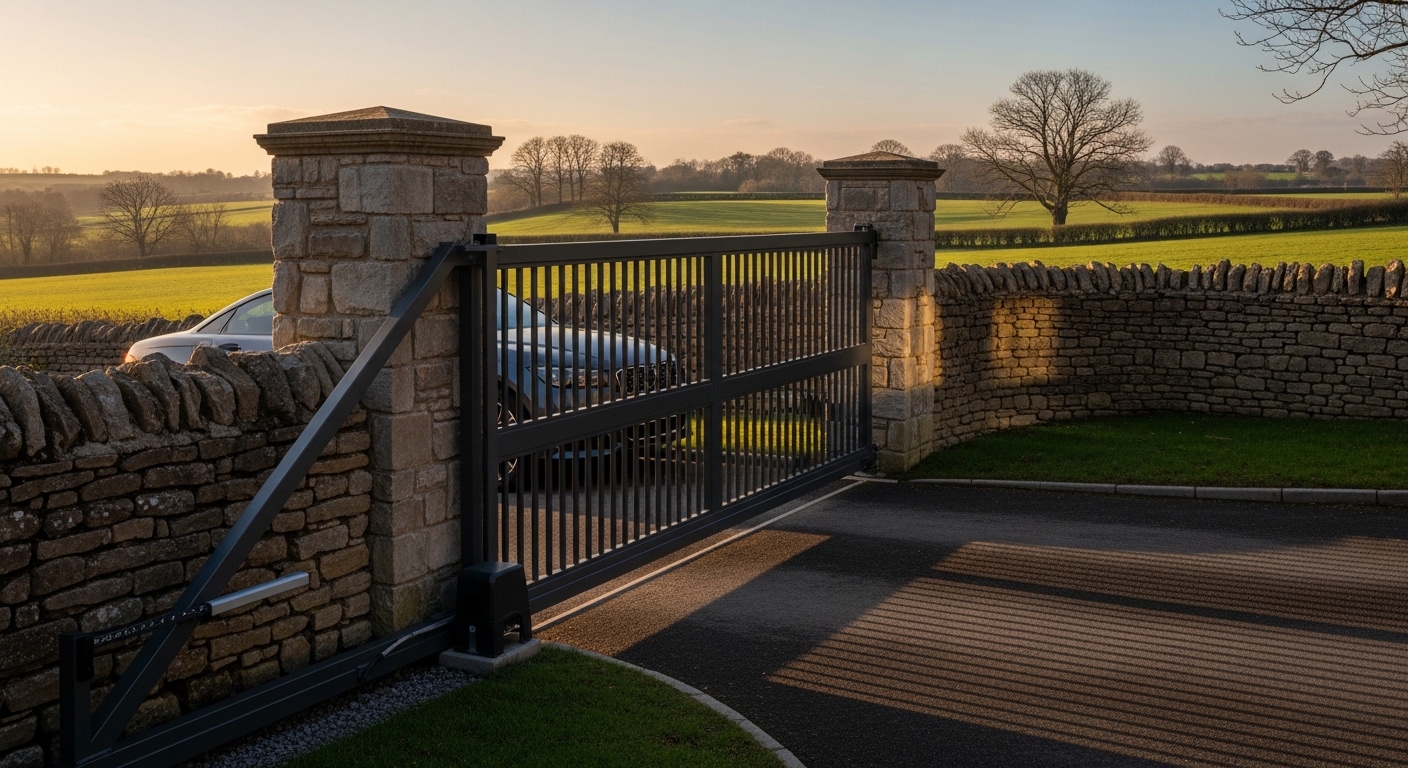
A sliding gate needs no clearance in the swing direction. It travels horizontally along the boundary line, retracting alongside the opening. The requirement is run-back space: a clear zone at least as wide as the gate itself, plus around 500mm for the motor housing and end stops, along the boundary wall or fence to one side of the opening.
On sites where run-back space is not available on either side, a biparting system with two leaves sliding in opposite directions halves the run-back requirement on each side. Where a ground track is impractical due to slope or ground conditions, a cantilever system suspends the gate from an overhead rail and removes the ground-level constraint entirely.
The practical implication is that sliding gates work on a wider range of Essex driveway geometries than swing gates. Short driveways, sloped approaches, near-road properties, and wide openings can all be served by a sliding gate where a swing gate would either be impractical or require expensive additional engineering.
Opening Width: Where Sliding Has a Structural Advantage
For openings wider than 5 metres, a sliding gate is generally the stronger engineering choice. A swing gate leaf wider than 2.5 metres puts significant leverage on its hinge post and motor, requiring deeper foundations, heavier post construction, and a higher-torque motor to operate reliably over time. The wider the leaf, the greater the structural demands at the hinge.
A sliding gate carries its weight along the track or cantilever rail rather than concentrating the load at a single hinge point. This makes it structurally more efficient for wide openings and is the reason that large rural property entrances across Essex, where wide access for farm vehicles or multiple cars is needed, frequently specify sliding gates regardless of whether space allows a swing alternative.
Cost: Swing is Usually Less Expensive, With Exceptions
On a standard flat Essex driveway with a 3 to 4 metre opening, a swing gate installation is typically £500 to £2,000 less than an equivalent sliding system. The saving comes from the absence of a ground-track foundation, which eliminates a significant groundwork cost, and from simpler motor mounting.
This gap closes on difficult sites. A swing gate on a sloped driveway requiring articulated hinge engineering may cost as much as a standard sliding installation. A cantilever sliding gate system adds £800 to £2,000 over a tracked sliding installation, which can close the gap with a straightforward swing project entirely. Get quotes for both types after the site survey; the comparison looks different on paper than it does once your specific site is factored in.
Maintenance and Reliability
Both gate types require annual servicing to maintain performance and keep manufacturer warranties valid. The specific service items differ. Swing gates: hinge lubrication and torque check, motor arm and linkage inspection, travel limit verification. Sliding gates: track cleaning, drive rack and pinion inspection, roller condition, cantilever bearing check if applicable.
Neither type is significantly more reliable than the other in normal residential use, provided the motor is correctly specified for the gate weight and the system is serviced annually. Under-specified motors, inadequate foundations, and poor hinge selection are the most common causes of early system failure in both types, which is why installer experience and specification quality matter more than gate type preference.
Appearance and Design
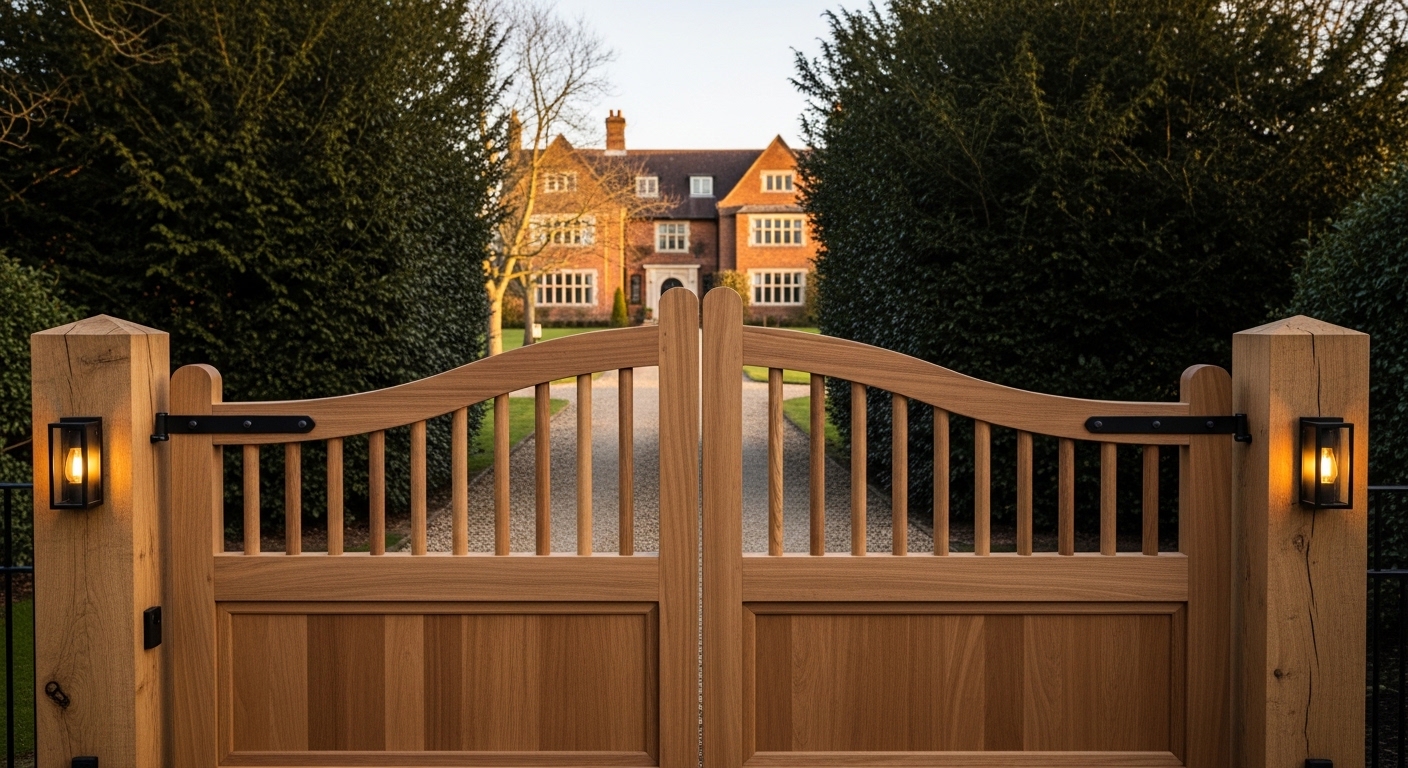
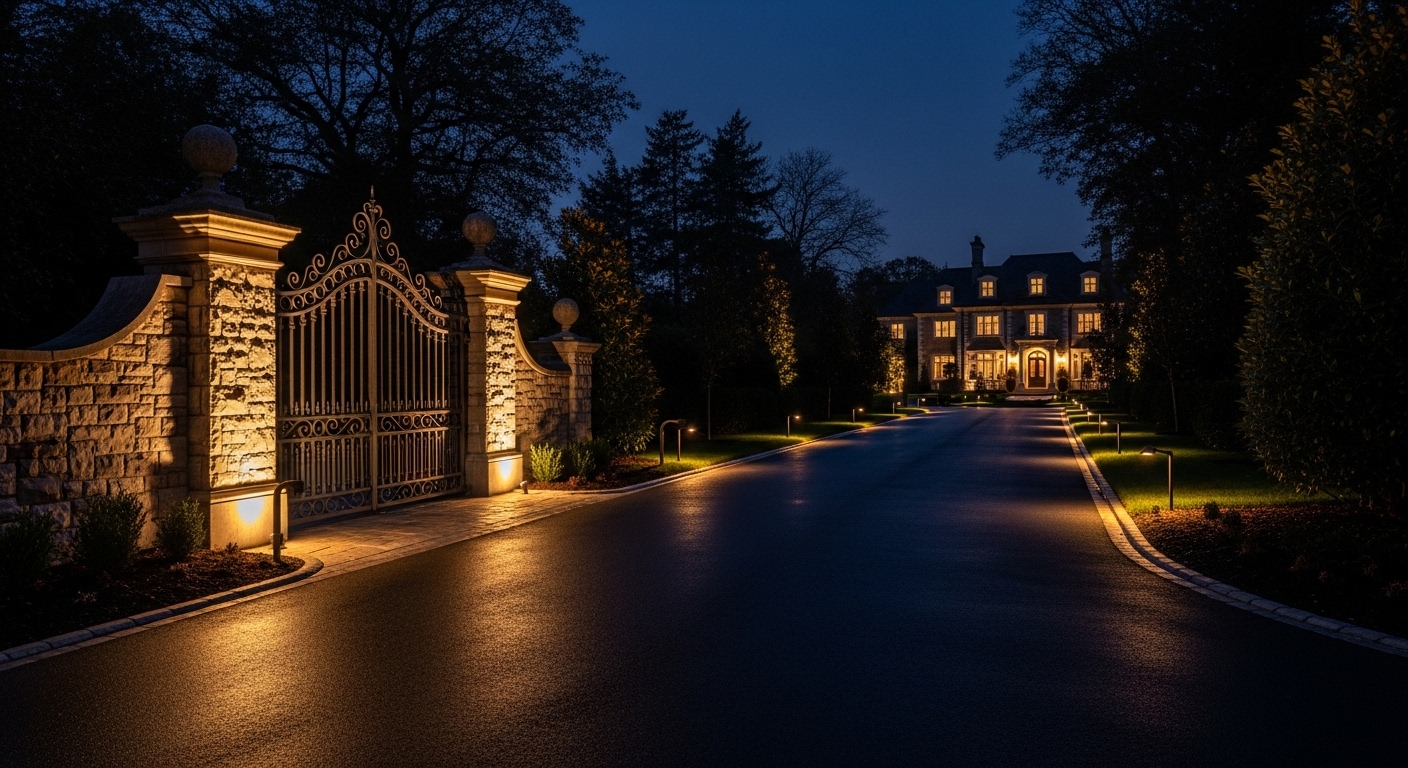
Swing gates have a slight aesthetic advantage for the majority of Essex property styles. The visual of paired gates opening symmetrically suits period properties, rural Essex homes, and established residential streets better than a single gate sliding to one side. Most bespoke gate designs, from traditional wrought iron with scrollwork to contemporary horizontal slat steel, are conceived as swing gate pairs.
Sliding gates have their own appeal, particularly in contemporary settings. A single powder-coated aluminium or steel gate sitting flat against the boundary when open is the defining look on new-build Essex developments. Biparting sliding systems, where two leaves slide in opposite directions, have a more balanced and symmetrical appearance that suits wider openings better than a single large leaf disappearing to one side.
Which Type is Right for Your Property?
- Short driveway with insufficient swing clearance: sliding gate
- Driveway slopes steeply downward from the road: sliding with cantilever, or significant hinge engineering for swing
- Opening wider than 5 metres: sliding for structural efficiency
- Flat driveway, 3 to 4 metre standard opening: swing gate is typically cheaper and aesthetically stronger
- Period property, rural Essex, barn conversion: swing gate in hardwood or wrought iron is usually the architectural fit
- Modern new-build or contemporary Essex property: either works; sliding is often preferred for the clean contemporary look
- Budget is the priority: swing gate on a standard site
The definitive answer for your specific property comes from a site survey with an installer who will measure, assess the clearances, and give you an honest recommendation based on what the driveway actually allows. Any recommendation made without a site visit is not based on sufficient information.